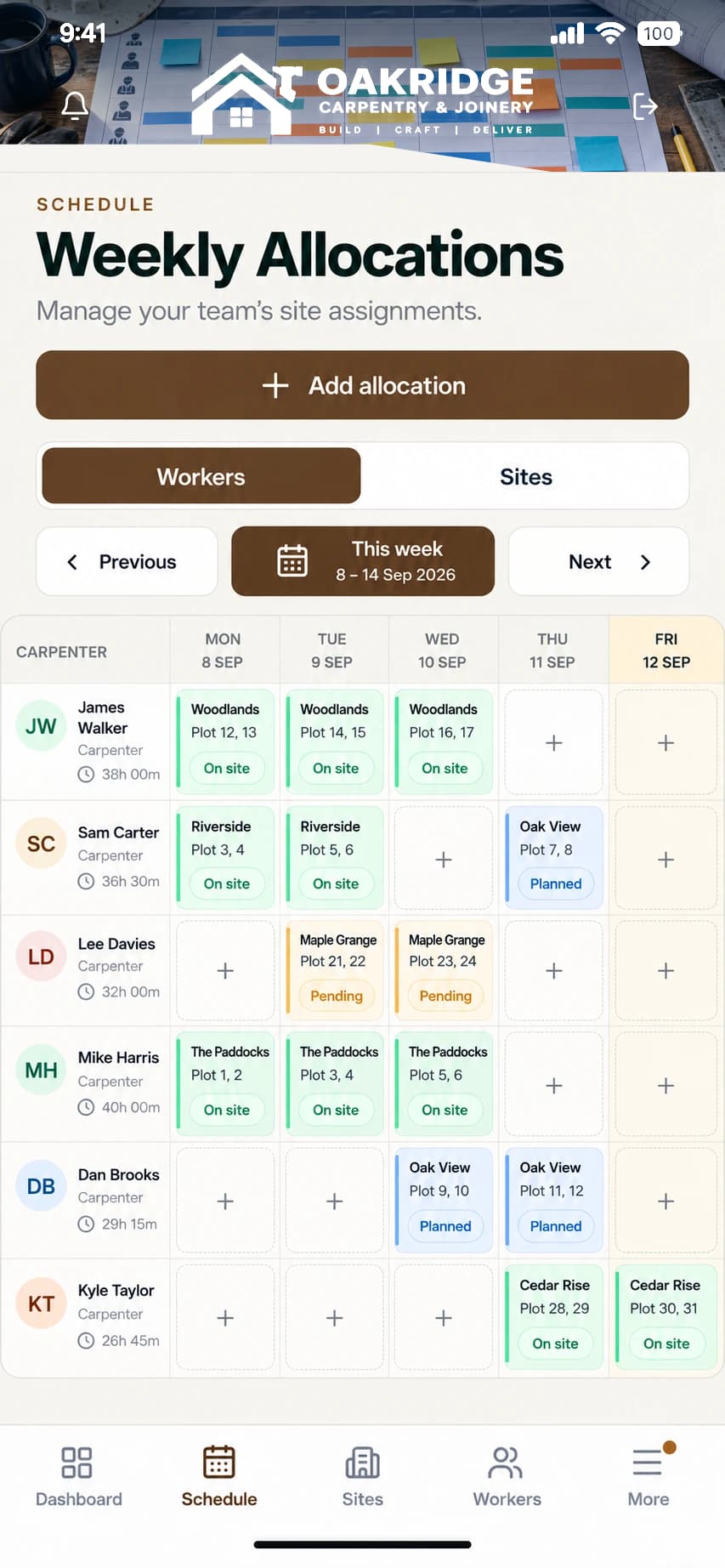
Allocate the right people to ready plots
Organise each development into plots, then allocate workers to the relevant work areas and trade stages. The weekly schedule shows who is assigned and where they are due. When a worker records holiday or sickness, review availability and move the affected work to someone else instead of relying on an old spreadsheet.
Keep the next visit connected to the last one
A plot may need preparation, first fix or coating work before a later return visit. Use your trade workflow to show the stage, and keep readiness notes, photos and issues with the work area. Workers can see their jobs and update progress while the office follows what has been recorded.
Approve pricework and hold retention for snags
Workers start a pricework task and submit it when complete without having to record daily hours for that task. The office sees work awaiting approval and can hold a fixed amount or percentage against an agreed snag checklist. Once the snags are checked and the retention is released, the worker can invoice the retained amount separately. Daywork remains separate, with daily entries grouped into weekly timesheets for review.
Keep unfinished pricework in the schedule
Started, unfinished pricework can carry forward to the next eligible working day on the same job. Company working days and recorded absences are respected. If another allocation clashes, the office is notified so a manager can resolve the plan rather than silently double-booking the worker.
One view for the office and the site team
Full administrators control company access. Office staff can manage day-to-day records, while contracts managers work within their assigned scope. Workers get their own view for allocations, attendance and job updates. Your logo and colours carry through the app on phones, tablets and computers.